

Blog
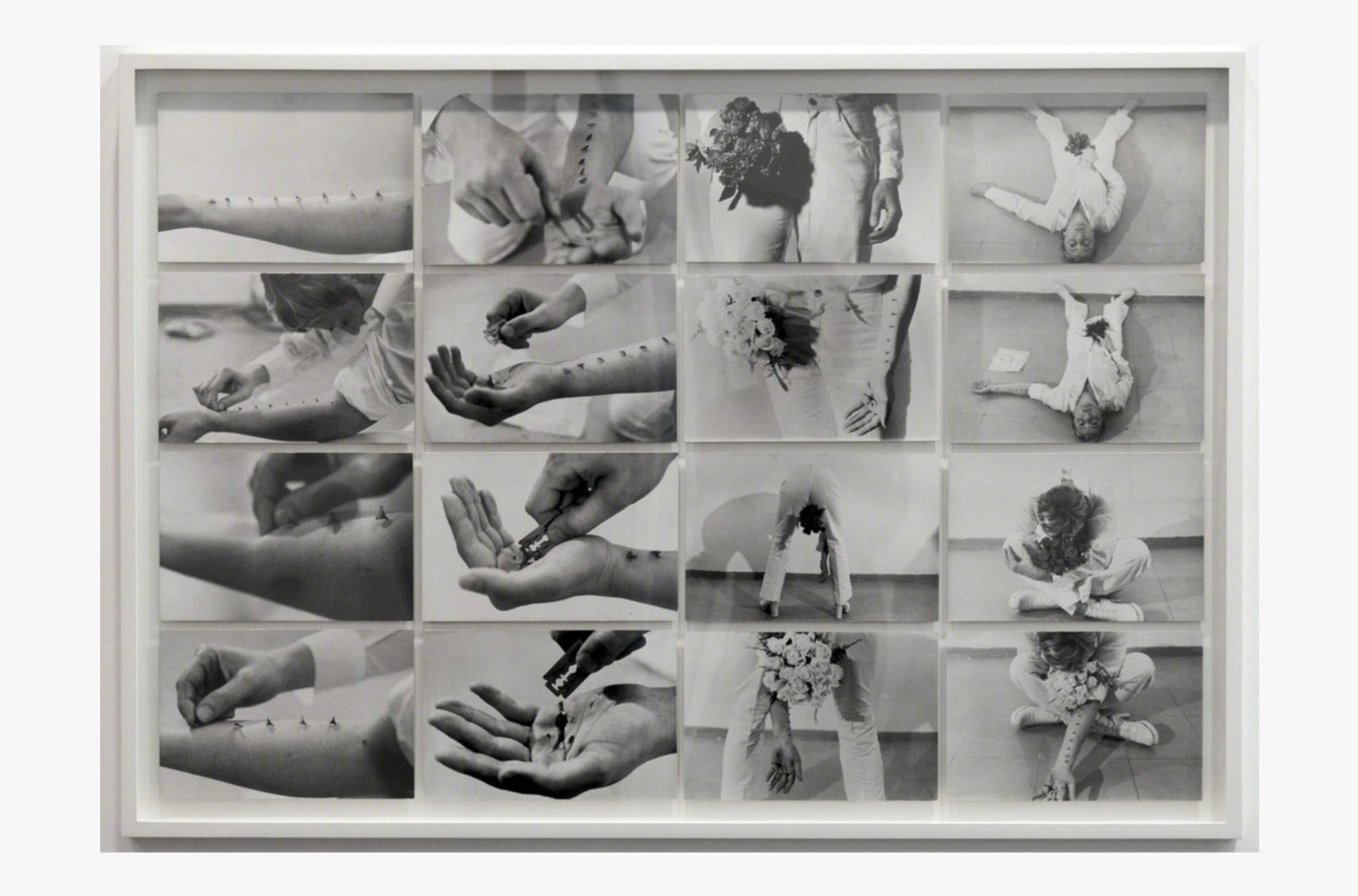

Marina Abramovic, «The Space in Between»
Marina Abramovic, «The Space in Between» Spiritual Journey to Brazil The Images The Serbian artist traveled to the South American country to explore the relationship between creativity and spirituality, an emotional journey filled with surprising encounters and revelations. I'm in Abadiânia. This is my room. This is the bed where I'll sleep for a while. I came to Brazil in search of "places of power" and people with a certain kind of energy. By "places of power," I mean waterfalls, trees, landscapes, rivers, plants, birds, insects. Where the sky is vast and full of clouds. Where when the rain suddenly comes, it immediately stops. Where you can breathe deeply. And when I say people with a certain kind of energy, I'm referring to those who have actually learned to draw energy from both within and without, to transform that energy and develop it in those who cannot do so. During her trip to Brazil, Marina Abramovic kept a diary in which she detailed her experiences. The artist's impressions of Abadiânia, where she met the medium João de Deus, reveal a profound process of discovery.

Women and Art - Vanessa Beecroft
Vanessa Beecroft 1969 Genoa, Italy: lives and works in New York (NY), USA Vanessa Beecroft "paints" three-dimensional group and individual portraits, featuring real girls and women. They occupy a specific space for a specific period of time; they are dressed, usually scantily, by the artist; they often wear wigs and never come into contact with the audience. The result is a strangely cold, mysterious atmosphere, which makes the viewer feel as out of place as the girls themselves, who barely move and seem simply waiting for something. "I'm interested in the relationship between human figures as real women and their function as artworks and images," the artist explains. Vanessa Beecroft 's art is difficult to classify. Are they performances or " living sculptures ," like those of the English Gilbert & George, or a modern form of portraiture, or psychological still lifes composed with living subjects? The question remains open. In one of her first exhibitions, in Cologne in 1994, Vanessa Beecroft presented 30 girls in a showroom to which the public had no access. The event was visible only through a rectangular window that gave the impression of peering through a peephole. The girls all had similar, non-athletic figures and wore black shoes and knee-highs, gray underwear, and black or gray T-shirts. Their uniform clothing created a striking visual composition in the space and was complemented by yellow wigs, some with braids, some without. Some girls were seated, seemingly sulking, others were leaning against the walls, still others were pacing slowly back and forth. None of them seemed to really expect anything to happen—instead of an action-packed lapse of time, there was only a dull duration. The title of the work was telling: A Blonde Dream . The event, conceived to be held in a gallery in Germany, explicitly alluded to the cliché of "Aryan beauty" widespread during the Third Reich.

Women and Art - Ghada Amer
Ghada Amer 1963 in Cairo, Egypt; lives in Paris, France and New York (NY) USA Ghada Amer doesn't create her paintings with paintbrushes and colors, but with needle and thread, which she uses to create dense surfaces reminiscent of the paintings of Brice Marden , Alberto Giacometti , and Cy Twombly . Yet despite their superficial material similarity, the images actually depict lascivious, perhaps even pornographic, female figures, which gradually reveal themselves as the viewer studies the intricate, carefully constructed, and powerfully dramatic surface. An immaterial phenomenon that suddenly takes on a physical presence. The figures multiply on the canvas, doubling, tripling, quadrupling; legs spread, the triangles of their pubic hair depicted in rainbow colors, as if a "typically feminine" pastime were literally playing with itself. An endless chain of women masturbating, veiled in a mass of cotton and long dangling threads, attempting to avoid the viewer's prying and curious gaze. Born in Egypt, Amer studied painting and sculpture in France and chose to settle in Paris. Her work denounces the Western vision of women, reduced to sexual objects. Gradually, subtly, and insidiously, the artist challenges conventional images of men and women. The effectiveness of her works depends in part on their ambivalence: looking at them, one wonders whether they are intended for voyeuristic pleasure or simply to frustrate the viewer's expectations. The artist's first works, created in the early 1990s, were inspired by the dress patterns included in women's magazines. Her interest lay in their a priori role model, the stereotype we unconsciously take for granted. The unconscious is notoriously obscure: how can we represent its workings? This is a question to which the Arab-French artist provides a striking answer, producing serial pornographic scenes that challenge the dominant male logic by opposing it with his own reflection. Her imagery (artistic repertoire) satisfies the criteria of transparency and immediacy achieved through effective psychoanalysis.

Women and Art - Marina Abramovic
Marina Abramovic 1946 in Belgrade, Yugoslavia: lives and works in Amsterdam, Netherlands When Marina Abramovic and her partner Ulay arrived in the Chinese city of Er Lag Shan on June 27, 1988, they had traveled 2,000 kilometers—the entire length of the Great Wall —in 90 days for this meeting at the edge of the world. It was also their last collaborative work as artists and as a couple. With this performance, titled The Lovers , Abramovic and Ulay transformed the personal experience of the end of their shared journey into a simple performance staged in a real geographical location. They had walked toward each other from opposite ends of the Great Wall only to separate again, forever. Interpreted as a geometry of love, the painful separation of their biographies appears as an inevitable result of a law of life. Since 1976, Abramovic and Ulay had collaborated on works in which their symbolic relationship was assumed as the basis of existential experiences: in the performance Breaking In/Breaking Out (1977), with their nostrils blocked by cigarette butts, they exchanged breath until they ran out of oxygen; in Interruption Space (1977), they took a run-up to repeatedly crash into a wall until they were exhausted; in Light/Dark (1977), they slapped each other until one of them stopped. The aim of these exercises was to subject the body to extreme physical states and test its limits. The audience's reaction was a key component of this physical self-experience, whether in the form of mental attention or concrete intervention, as in the case of the performance Incision (1978), during which Abramovic was attacked by a spectator. For the Nightsea Crossing performance series, 1981–86, however, the participants were carefully selected. Marina Abramovic was primarily interested in the intersection of political and individual history, so she and Ulay used their shared birthday as the occasion for a performance— Communist Body—Fascist Body . On November 30, 1979, they invited some friends to their apartment to celebrate; the guests found Abramovic and Ulay lying on a mattress, sleeping or pretending to be asleep, with two tables set beside them, set with dishes, champagne, and caviar from their respective countries of origin. The performance illustrated the details of two biographies unwittingly marked by a dictatorship: Marina's birth certificate bore an official stamp with a red star, Ulay's with a swastika.

INVESTING IN CONTEMPORARY ART - How to orient yourself when purchasing
How to orient yourself in purchasing To purchase a work of art it is essential to follow a few simple rules: Knowing the history of art ; Visit the most significant contemporary art museums and exhibitions; Visiting trendy galleries Read specialized magazines; Follow the auction catalogues proposed periodically carefully While these are general guidelines, it's clear that before venturing into the art market, you need to carefully establish a budget and base your choices on it. The amount allocated to art should never exceed 20% of your assets, and it's not necessarily necessary to have huge sums of money; contrary to popular belief, you can make excellent purchases starting from €2,000-3,000. A very common mistake is to be drawn solely to the artist's name. Every purchase must take quality into account and be fully aware of the artist's creative journey, since each painter expressed their best talents in a relatively limited period of their life. If they were successful, they behaved like replicants, endlessly repeating the same work. It's also important to understand that the same artist has a virtually limitless range of prices. In short, to make a good purchase, you need to be familiar with prices, have specific knowledge of the artist you're interested in, and, above all, buy from reputable sources. In summary, to make a good purchase you need to: Ensure the authenticity of the works ; Choose the artist based on your budget ; Know, at least in broad terms, the history of art ; Carefully analyze the artist's creative process ; Attend exhibitions, museums and specialized galleries ; Be careful with the subjects; Check auction prices carefully; Don't be fooled by the artist's high-sounding name ; Don't overlook artists who are considered minor or emerging young artists.

INVESTING IN CONTEMPORARY ART - The factors that determine prices
The factors that determine prices In pure theory, there should be a close relationship between an artist's historical value and their market price. The higher the price paid, the more significant the artist's role in art history. In reality, the factors that determine the prices of works are multiple and extremely complex. One answer could be that an artist's market takes off when their cultural value finds confirmation within the art system. In short, prices should be considered as the sum of a set of elements that the collector must always keep in mind when purchasing a work. These elements can be summarized in nine points: The quality of the work (the artist's technique): The market values oil on canvas or acrylics most. These are works that are not at risk of deterioration and are relatively easy to transport and install. Tempera, watercolor, pastels, and finally drawings are immediately added. It's safe to say that, for the same size, a tempera is valued at half the price of an oil, a watercolor at about a quarter, and a drawing at less than a tenth. the degree of marketability and attractiveness (size and subject). The value of the painting within certain dimensions; the larger it is, the higher its value. the artistic moment in which an author has created his work within his career (creative-innovative phase and repetitive-manneristic phase) the critic of reference and the interest of the critics The rarity of the works. Overproduction, especially if the artist is not internationally renowned, hinders the increase in their prices, as supply exceeds demand. national or international diffusion. Publications, awards won, and exhibition history. Works exhibited in major exhibitions and published in monographs, important journals, and art history books are more valuable. key collectors. The value of works increases if they belonged to important collectors. role of museums and public institutions.

Origin of the contemporary art market
So far we have said that the origins of the market are very ancient, but in truth to speak of a free market , the one based on the system of private galleries, which corresponds to the current structure of the contemporary art market, we have to go back to the 19th century. It is therefore necessary to take a step back and examine the circumstances of its birth and development, which were built on the foundations of a new and radical transformation and revolution in the conceptions of art at the end of the 19th century. We are therefore referring again to the mid-seventeenth century, a period that saw the birth of a monopoly even more restrictive and rigidly structured, if you will, than the previous ones: that of the art academies . Founded with the aim of officially legitimizing the validity of artistic production, these institutions effectively controlled it until the second half of the nineteenth century. Let's examine the French model in particular. 1648 was the year in which the Académie Royale de Peinture et Sculpture was founded in Paris, the most influential body of institutional recognition. It organized annual exhibitions, the Salons , whose participation or exclusion determined the artists' entire careers, their chances of affirmation, and their commercial success. The judging panel consisted of academics, teachers from the Ecole des Beaux-Arts, and the director of the French Academy in Rome (the capital of ancient and classical art). Acceptance of works by this panel depended on their conformity to classical aesthetic theory, which the institution aimed to defend and preserve. Artists aligned with academic canons received prizes at the Salons and commissions to create public works, and their works were proposed to public institutions and museums for purchase. If we also keep in mind that the Academy's statute forbade official artists from directly marketing their own works, we realize the total control it exercised both over the content of the works and over their marketing. The market, therefore, which had incredibly developed in the 16th and 17th centuries, as mentioned earlier, was not a free market, but rather heavily constrained by these institutions, which, moreover, combined with the conformist approach of criticism and the dominant taste of the upper-middle-class public, left no room for the emergence of innovative artistic production. An officially regulated, regulated, and limited artistic production was inextricably linked to an equally regulated and consequently limited official market. This situation began to change in the second half of the nineteenth century , with the emergence of Romantic ideals over Classicist ones. And it was precisely France that was at the forefront of this transformation, which saw the birth and development of independent exhibitions organized by the artists themselves, on the one hand, and a new type of private gallery, on the other. Starting with exhibitions, let's briefly recall that 1855 was the year of the Universal Exhibition in Paris, which included works by artists from twenty-eight countries, as well as paintings rejected by the Salon jury. Meanwhile, 1863 saw the Salon des Réfusés, the first (and only) exhibition entirely dedicated to artists excluded from the official Salon. It should be kept in mind that among the innovative artists of the latest generation, mistreated and excluded from the official circuits, there were names like Cézanne (who tried every year to send his works to the Salon without ever being accepted!) and like the Impressionists, who were among the first to demand and pursue their independence from the academic supremacy, and thus constituted themselves as a revolutionary reaction movement to the dominant situation (just think that the term "impression" was used for the first time in 1874 [1] with an ironic and negative meaning to describe their works). After these first initiatives, more or less successful, a true alternative salon was born in 1884: the Salon des Artistes Indépendants, organized by the Société des Artistes Indépendants, which provided for neither prizes nor a jury. The Salon d'Atomne, founded in 1903, was this time equipped with a jury, with the specific aim of shaping the tastes of the public and collectors by directing them toward innovative trends in contemporary art. This particularly successful event hosted exhibitions of historic importance, such as those of the Fauves and Cubists, as well as a Cézanne retrospective. But let us return to the Impressionists , to underline how crucial their movement is, because it inaugurates the creation of an avant-garde art , that is, of modernism , an aesthetic revolution in pictorial language, but also the creation of an alternative market , made up of private galleries, which through new commercial and promotional strategies, had to invent a new market that corresponded to the new art. The partnership with Paul Durand Ruel (1870), marks the appearance of the first truly modern dealer, an innovator both in terms of artistic choices and in terms of commercial and critical strategies. Ruel's new commercial system, which would later become the model of the new international avant-garde market, consists of: in the valorization of a new art not yet requested by the market; · in the monopoly on artistic production, in order to control prices; · in the promotion of artists through the organization of personal exhibitions (including abroad to give them an international dimension) and through the founding of magazines for the dissemination of information. Finally, let's mention two more celebrated dealers who embraced Ruel's teachings and continued his legacy: Ambroise Vollard and Daniel Kahnweiler. One was the principal dealer of Gauguin and Cézanne, but also of Degas, Renoir, Van Gogh, Matisse, and Picasso, and the other was a Cubist dealer, credited with investing heavily in the critical appreciation of his artists through collaborations with renowned writers and poets (such as Apollinaire and Max Jacob), and generally expanding contacts between collectors, critics, and dealers. With these developments, we arrive at the 1910s, and the history of the Parisian market continues, reaching full maturity in the 1920s, and growing further in the 1930s and 1940s. These same years saw the formation and transformation of various market centers throughout Europe, such as London, Berlin, and Brussels. If we dwell on the history of the Parisian market , it is because it played a particularly significant role, first in breaking down certain frontiers and then in leading the world market. Paris at this stage was the home of art, the capital of modernism (most modern artists, as is well known, lived and worked in Paris: from Picasso to Matisse, from Braque to Léger, from Gris to Derain, etc.). So let's take a step back and point out that 1914 in particular marked a turning point in France: the resounding success of the auction of an avant-garde art collection testified to the interest of a vast, high-society audience (and no longer just a narrow circle of amateurs). Bourgeois society identified the value of avant-garde art with the dynamic spirit of modern times, which contrasted with what was past, outdated, and no longer relevant. The new social fact was that the ruling class recognized the values represented by the new art, and appropriated them. But at this point, history repeats itself, because the incredible social and market success of contemporary art triggered a new reaction from the new generation of postwar avant-garde artists: the Dadaists and the Surrealists . Their movements were characterized by a revolutionary political stance, a radical critique of the values of bourgeois society, and opposition to the commodification of art. It was precisely this need to revive the avant-garde spirit that drove them to seek an even more alternative, self-managed and self-promoted market. But, ironically, they themselves became successful artists in an even larger, more international market. Indeed, during the Second World War, due to their political stances, they were forced to flee, almost en masse, to the United States, where they were welcomed with great enthusiasm both by the gallery owners who made their fortune (especially Peggy Guggenheim) and by the younger generations of American artists who were profoundly influenced by them (and we're talking about artists like Pollock, Rothko, and their circle). We've discussed France so far for the reasons mentioned above, but we can't help but briefly touch on the German situation, which was particularly important in the context of European modernism. (We'll leave the analysis of the Italian side until later, because, being the one that concerns us most closely, it deserves a separate discussion to delve into it in more detail.) In Germany, avant-garde art developed, beginning in the 1910s, with its own characteristics and was essentially represented by the German Expressionism of artists such as Kirchner, Schmidt-Rottluff, Nolde, Macke, and Marc, and by the abstract art of Kandinsky and Klee, and by the Bauhaus. It was a vibrant scene until the rise of Nazism, which began to persecute avant-garde art, which it labeled "degenerate," and its creators. A emblematic example was the organization of a negative propaganda exhibition, which toured a dozen German cities from 1937 to 1941, presenting approximately six hundred works requisitioned by the Nazis. After the Second World War, New York (which until then had been essentially limited to reselling European art, having not yet developed an original indigenous art form) began to become the world center of contemporary art, replacing Paris as the world's leading art form. The gallery system developed alongside the emergence of avant-garde trends, marking the transition from modernism to contemporary art proper, such as Abstract Expressionism (1940s and 1950s), Minimalism, Pop Art (1960s), which achieved international success with the awarding of the Rauschenberg Prize at the 1964 Venice Biennale, and later Process and Conceptual art, in their various forms. The European avant-gardes of the 1950s at the centre of the Parisian market were essentially Informalism and Nouveaux Réalisme, which were also very important artistic phenomena but which, however, seem not to have held up to comparison with contemporary American trends, supported by a market that had become much more vital and supported by the government itself (!), which strategically used the new art to assert a cultural, as well as economic and military, supremacy over Europe. From the post-World War II era onward, the American art movement never stopped. To understand the scale of the phenomenon, consider that in the 1970s, there were more than two hundred galleries concentrated in just one New York neighborhood, Soho, and over seventy magazines dedicated to contemporary art! The 1980s and 1990s then witnessed the incredible phenomenon of the instant historicization of new stars, which saw young artists achieve immediate success and sky-high prices. Today, prices for living American artists reach dizzying figures, unattainable for European artists. The most important centers of the market worldwide: New York is currently the center of the contemporary art system, and the artists supported by the galleries of this market are the most valued. The second largest market is the English market, centered in London. The German market is also very strong in Europe. But it is fundamentally along the New York-London axis that the reference models impose themselves with a greater capacity for cultural and economic penetration. [1] Louis Leroy in Le Charivari , 25 April 1874

The contemporary art market in Italy
The contemporary art market At the end of the 19th century, Italy lacked commercial structures, which is why Italian artists were forced to turn to Paris to establish relationships with merchants. The dealer they turned to was essentially Goupil, who, unlike Ruel, was not an avant-garde dealer, just as Italian painting was not avant-garde. At this stage, Italian painting was still characterized as very moderate, still traditional compared to the French avant-garde, focusing as it did on genre scenes from the Neapolitan and Roman schools. A new and important development was the organization, in 1895, of the First International Art Exhibition of the city of Venice, known as the Venice Biennale (which we will discuss in more detail later). Let us emphasize that on paper, it was an operation aimed at creating a new (Italian) hub for the contemporary art market, capable of initiating an international dialogue with the research of other countries, with which it aimed to engage. In truth, however, it was initially managed in an official and traditional manner and thus remained effectively closed to new trends, so much so that it provoked polemical reactions from young artists. Thus, here too, as in France, an exhibition of the "rejected" artists from the Biennale was held, again in Venice, but it did not materialize in the development of an original, cohesive, and energetic movement like Impressionism. In Italy, the most important gallery, active since 1870, was that of Luigi Pisani in Florence, which modeled itself on Goupil and worked with the Tuscan Macchiaioli (Fattori, Signorini, Banti, Lega). With the exception of the artist Medardo Rosso, an innovative sculptor, modernism in Italy began to emerge in the 1890s, with the Milanese Divisionists (Segantini, Pellizza da Volpedo, Morbelli), who gravitated around the Grubicy brothers' gallery. However, it is Futurism that is considered the first true Italian avant-garde movement. Futurism, founded by Marinetti (which we analyze here from the perspective of its sociocultural impact rather than its aesthetic and poetic content), is particularly distinguished by its organizational, promotional, and commercial strategies. From its international launch, through the publication of its Manifesto in the Parisian newspaper “Le Figaro” (1909), to its publicity through posters, flyers and so on, to the programming of exhibitions in various European countries: 1912 saw the debut of the Futurist painters in a well-known gallery in Paris, followed by exhibitions in London, Berlin, Brussels, Amsterdam. The cultural success of the operation was total: the Futurists managed, through these strategic actions, to insert themselves in a very short time into the most vital circuits of the international avant-garde (even influencing them, as in the case of the Russian Futurists and the English Vorticasts). The Sprovieri Gallery in Rome became the center of Futurist activity, with a very dynamic program, which included, in addition to the exhibition, a series of activities, such as conferences and concerts. Although the market achieved a certain level of development between the 1920s and 1930s, it failed to take on an international dimension in the galleries' activities, and this is fundamentally the reason why Italy was destined, at least up to a certain point, to remain rather marginal in the international contemporary art system. It is no coincidence that there are many examples of artists who moved to Paris: from Modigliani to De Chirico, Savinio, De Pisis, Campigli. One of the causes of this situation is probably the Venice Biennale itself, which exercised a sort of monopolistic control over sales (in fact, until the 1960s it directly managed the sales activity). In 1931, it was joined by the Rome Quadriennale, another important institution still active today, dedicated entirely to contemporary Italian art, which also handled the sale of the works. In the post-World War II era, around the 1950s, the situation began to gradually change, and with the rise of Art Informel, we witnessed a phenomenon of openness to the international scene. And it was in the 1960s and 1970s that this process reached full fruition: a series of avant-garde galleries, initially in Milan, began to present exhibitions of the most important international artists and emerging artists of the Italian avant-garde, which this time proved truly competitive in terms of innovation. We are talking about research linked to Pop Art (with Schifano, Festa, Angeli, Ceroli) and Conceptual Art (with Paolini) and Povera Art (with Kounellis, Pascali, Zorio, Anselmo, Merz). It was a very happy period for Italy, perhaps we could say the happiest in the history of contemporary art, because it succeeded in fully establishing itself on the international scene. The historic Roman galleries of this period are the Tartaruga by Plinio De Martiis, the Galleria La Salita, the Attico gallery by Sargentini, the very famous Turin gallery of Gian Enzo Sperone (connected with Leo Castelli of New York) and some Milanese galleries such as the Galleria Toselli, etc. The 1980s were marked by another enormous international artistic phenomenon: the Transavanguardia (Cucchi, Clemente, Chia, Paladino, and De Maria), which represented a return to painting. This return to the materialization of artworks on a painted surface (which affected not only Italy, but also other countries, particularly Germany and the United States) coincided with an unprecedented market development. Currently in Italy, Milan is probably the liveliest center of the market, while Turin is the most important city in terms of the quality of its cultural offering, being home to the most important museum of contemporary art in Italy (the Castello di Rivoli), and to important foundations such as the Sandretto Re Rebaudengo.
Schifano's Fakes, Coffee in Bari
Carabinieri officers from the Bari Cultural Heritage Protection Unit seized 386 paintings falsely attributed to artists such as Schifano, Caffè, Scheggi, Vasarely, Borghese, Alinari, Dorazio, and Guidi. The operation was ordered to combat the "widespread" phenomenon—the Bari Prosecutor's Office explained in a statement—of art counterfeiting. The investigation identified 35 individuals, all working in various capacities in the art world, as being involved in the counterfeiting activity. Fourteen of them were also charged with conspiracy. The curator of one of the artists' archives is implicated in the investigation, as he is responsible for forging the certificates of authenticity accompanying the artworks to certify their authenticity and for changing their archive number. The forger responsible for faithfully reproducing the original works has also been identified. A further 12 searches were carried out and the seizure of the four general catalogues of works by the artist Nino Caffè was ordered nationwide. The publisher, implicated in the affair, promoted the false authenticity of the works by publishing them in the official catalogue, following prior agreements with the curator and the payment of significant sums by unsuspecting, good-faith buyers. "The investigation," explains the Bari Public Prosecutor's Office, "has covered the entire country and is ongoing with the aim of purging the art market of all the works released in the meantime by those responsible." The price the seized paintings would have commanded if they had been put on the market is estimated at between €800,000 and €900,000. In addition to the works, 2,736 general catalogues were also seized. During the investigation, the military seized the preparatory drawings for some works, paintings on easels with the paint still wet, and the programs for creating the works of art were found on some computers. Bari city