


ALIGI SASSU - Moments of Peace
ALIGI SASSU - Moments of Peace
SKU:patac003
Lithographic printing, 50 x 70 cm
 Delivery to Italy starting from €15, in 7-15 working days
 Returns within 14 days
 Payment methods available:


Bank transfer
Share this product
Characteristics
Characteristics
Stato di conservazione: Optimal
Tiratura: e.g. 179/225
Formato: Medium (40-100cm)
Orientamento: Vertical
Supporto: Other
Soggetto: Venice
Description of the work
Description of the work
ORIGINAL 20-COLOR SILKSCREEN PRINT ON JADE CONSTELLATION WATERCOLOR CARDBOARD 70 X 50 CM MADE IN VENICE ON FIORENZO FALLANI'S FRAMES IN 225 COPIES, EACH WITH THE ARTIST'S AUTOGRAPHED SIGNATURE AND THE IMPRESSION OF THE SANZANOBI SEAL TO GUARANTEE ITS AUTHENTICITY
Aligi Sassu was born in Milan, Lombardy , to Lina Pedretti, originally from Parma , and Antonio Sassu, a Sardinian , who in 1894 had been one of the founders of the Italian Socialist Party in Sassari and who had moved to Milan in 1896. His father, a close friend of Carlo Carrà , took him in 1919, when he was just seven years old, to the National Futurist Exhibition at the Moretti Gallery in Palazzo Cova , which brought together the greatest Futurists and the younger generation.
At the beginning of 1921 the Sassu family moved back to Sardinia , to Thiesi in the province of Sassari, where Antonio opened a shop. There Aligi attended elementary school and became acquainted for the first time with horses , which would later become his trademark , and the bright colours of Sardinia which would permeate his painting . After a three-year stay, the family returned to Milan and here Aligi showed even more his interest in reading and futurist art . [1]
 In 1925 , with his family now in financial straits, he was forced to leave school. Initially, he worked as an apprentice at Pressa , a lithographic workshop; the following year, he worked as an assistant to a mural decorator; at the same time, by attending evening classes, he managed to complete his studies. Together with his friend and futurist designer Bruno Munari , he introduced himself to Filippo Tommaso Marinetti , the founder of Futurism . This meeting was fruitful: in 1928, he was invited by Marinetti to participate with his works in the Venice Biennale .
Shortly afterwards, together with Bruno Munari, he defined the Manifesto of Painting "Dynamism and Muscular Reform" (which remained unpublished until 1977), assuming as its basic premise the representation of dynamic, anti-naturalistic forms. In those years, thanks to his father's friendships, he was able to become familiar with the works of Boccioni and Carlo Carrà , Gaetano Previati , Giandante X (as Dante Persico was known), and Giuseppe Gorgerino , and he sometimes drew inspiration from them in his paintings. He studied Picasso , Diego Velázquez , and the plastic nude . From this period is The Last Supper , the painting that epitomizes the art of Aligi Sassu and, in the modern clothing of the characters and the urban setting, foreshadows what would be his future style.
In the years between 1927 and 1929 he painted mostly small-sized pictures, often having sport , industry and machines as their subject; this is how the Cyclists , the Miners , the Worker , the Boxers and the Red Men were born. With Giacomo Manzù , Nino Strada , Candido Grassi , Giuseppe Occhetti , Gino Pancheri , in 1930 he managed to set up his first important exhibition in Milan, also reviewed by Carlo Carrà. In 1934 he stayed for a period of three months in Paris [2] (in rue Elisée des Beaux Artes) studying in depth the works of Matisse , Théodore Géricault , Delacroix , Cezanne and the paintings of the nineteenth-century painters exhibited at the Louvre .
In particular, the influence of Delacroix and his battles is clearly visible in Sassu's paintings. He returned to Paris the following year and again in early 1936. In 1935 he formed the Red Group with Nino Franchina , Vittorio Della Porta and others. In 1936 he painted The Café , one of his most famous paintings, depicting the Coupole in Paris , as well as The Councils , a satirical vision of the clergy of Rome. In the meantime, his political commitment increased and, when the Civil War broke out in Spain , he became an active anti-fascist. An anti-Francoist and sympathizer of the Spanish partisans, he painted The Shooting in the Asturias .
Accused of conspiracy, locked up in the Regina Coeli prison in Rome , he went through a rather problematic period at the end of which he took up painting again. His drawings with mythological subjects and portraits of prisoners date back to this period. He was pardoned in July 1938 , but remained under special surveillance. Only in 1941 was he able to exhibit again: for the first time the Uomini rossi appeared in public. The exhibition took place in the "Bottega di Corrente". Although he had been an active participant in Corrente [3] , the periodical of cultural opposition to the regime, Sassu preferred to opt for a "personal" exhibition, not adhering to the collective exhibitions of the artists of the time.
In 1943 he illustrated Manzoni 's " Promessi sposi " with fifty-eight watercolours [4] . He presented these tables later, in 1983 , in Manzoni's house in Milan. In 1947 , having moved to the province of Varese , he worked assiduously, painting in particular Coffee , reminiscences of Paris , and sacred subjects. Shortly afterwards he devoted himself to ceramics, producing around a hundred pieces. Returning to Sardinia in 1950 , he drew inspiration from the landscapes that surrounded him and painted scenes of peasant and seafaring life, such as the Tonnare ; he studied the murals and muralists Diego Rivera and José Clemente Orozco , and then Vincent van Gogh and Piero della Francesca . Notable from that period is La Minia , the fresco in the guesthouse of the mines of Monteponi (Iglesias) and not only for its dimensions, 3.50 m by 12 m.
In 1925 , with his family now in financial straits, he was forced to leave school. Initially, he worked as an apprentice at Pressa , a lithographic workshop; the following year, he worked as an assistant to a mural decorator; at the same time, by attending evening classes, he managed to complete his studies. Together with his friend and futurist designer Bruno Munari , he introduced himself to Filippo Tommaso Marinetti , the founder of Futurism . This meeting was fruitful: in 1928, he was invited by Marinetti to participate with his works in the Venice Biennale .
Shortly afterwards, together with Bruno Munari, he defined the Manifesto of Painting "Dynamism and Muscular Reform" (which remained unpublished until 1977), assuming as its basic premise the representation of dynamic, anti-naturalistic forms. In those years, thanks to his father's friendships, he was able to become familiar with the works of Boccioni and Carlo Carrà , Gaetano Previati , Giandante X (as Dante Persico was known), and Giuseppe Gorgerino , and he sometimes drew inspiration from them in his paintings. He studied Picasso , Diego Velázquez , and the plastic nude . From this period is The Last Supper , the painting that epitomizes the art of Aligi Sassu and, in the modern clothing of the characters and the urban setting, foreshadows what would be his future style.
In the years between 1927 and 1929 he painted mostly small-sized pictures, often having sport , industry and machines as their subject; this is how the Cyclists , the Miners , the Worker , the Boxers and the Red Men were born. With Giacomo Manzù , Nino Strada , Candido Grassi , Giuseppe Occhetti , Gino Pancheri , in 1930 he managed to set up his first important exhibition in Milan, also reviewed by Carlo Carrà. In 1934 he stayed for a period of three months in Paris [2] (in rue Elisée des Beaux Artes) studying in depth the works of Matisse , Théodore Géricault , Delacroix , Cezanne and the paintings of the nineteenth-century painters exhibited at the Louvre .
In particular, the influence of Delacroix and his battles is clearly visible in Sassu's paintings. He returned to Paris the following year and again in early 1936. In 1935 he formed the Red Group with Nino Franchina , Vittorio Della Porta and others. In 1936 he painted The Café , one of his most famous paintings, depicting the Coupole in Paris , as well as The Councils , a satirical vision of the clergy of Rome. In the meantime, his political commitment increased and, when the Civil War broke out in Spain , he became an active anti-fascist. An anti-Francoist and sympathizer of the Spanish partisans, he painted The Shooting in the Asturias .
Accused of conspiracy, locked up in the Regina Coeli prison in Rome , he went through a rather problematic period at the end of which he took up painting again. His drawings with mythological subjects and portraits of prisoners date back to this period. He was pardoned in July 1938 , but remained under special surveillance. Only in 1941 was he able to exhibit again: for the first time the Uomini rossi appeared in public. The exhibition took place in the "Bottega di Corrente". Although he had been an active participant in Corrente [3] , the periodical of cultural opposition to the regime, Sassu preferred to opt for a "personal" exhibition, not adhering to the collective exhibitions of the artists of the time.
In 1943 he illustrated Manzoni 's " Promessi sposi " with fifty-eight watercolours [4] . He presented these tables later, in 1983 , in Manzoni's house in Milan. In 1947 , having moved to the province of Varese , he worked assiduously, painting in particular Coffee , reminiscences of Paris , and sacred subjects. Shortly afterwards he devoted himself to ceramics, producing around a hundred pieces. Returning to Sardinia in 1950 , he drew inspiration from the landscapes that surrounded him and painted scenes of peasant and seafaring life, such as the Tonnare ; he studied the murals and muralists Diego Rivera and José Clemente Orozco , and then Vincent van Gogh and Piero della Francesca . Notable from that period is La Minia , the fresco in the guesthouse of the mines of Monteponi (Iglesias) and not only for its dimensions, 3.50 m by 12 m.
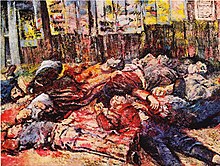 With Mazzotti and Fabbri, in 1954 , in Vallauris he met Picasso for the first time. Two years later, at a new meeting in La Californie , Picasso showed him the sculptures that he would later exhibit at the Museum of Antibes . The same year he exhibited at the Venice Biennale, among other works , The Martyrs of Piazzale Loreto , which Giulio Carlo Argan purchased for the National Gallery of Modern and Contemporary Art . In Albissola Capo painted the cycle of the Chronicles of Albisola , a good representation of the artistic life of the town which at the time saw the gathering of ceramists, poets, writers, critics, and of which Aligi Sassu was a protagonist together with Lucio Fontana , Salvatore Fancello and other artists. The work, commissioned by the owner of the Trattoria Pescetto , occupied an entire thirty-five metre wall and, when the restaurant closed 14 years later, it was completely dismantled. Today only a few photographs remain.
In Arcumeggia he painted the frescoes Runners (1957), a work of considerable size in homage to cycling, Jesus nailed to the cross , XI station of the Via Crucis (1963), and Saint Martin gives part of his cloak to the poor (1991).
Ten years later, his Spanish period began (in 1963 in the Balearic Islands), with the Tauromachie , presented by the Spanish poet Rafael Alberti , the mythological characters, his experiments with acrylics and increasingly bright colours (red will be even more present in his paintings). In 1965, his drawings and sculptures were exhibited at the Galleria Civica in Monza; it was then the turn of an anthological exhibition in Bucharest and, subsequently, at the Galleria d'Arte Moderna in Cagliari (where, in 1967 , Foiso Fois was also present). In the same year, he moved to Monticello Brianza , during which he mainly painted murals .
From 1968 belong various large paintings, among which the Che Guevara , donated to the Museum of Havana . In 1969 , at the Biennale, he was awarded the first prize for the painted wall . In 1972 he married Helenita Olivares . Travelling between Majorca and Italy , he collaborated in 1973 with the Sicilian Vespers for the reopening of the Teatro Regio in Turin . In the Vatican a room was dedicated to him in the Gallery of Modern Art . Three years later he created two mosaics for the parish of Sant'Andrea in Pescara and the following year he exhibited his works in the cities of Rotterdam , Toronto and Majorca . In 1984 he held a first anthological exhibition in Ferrara , at the Palazzo dei Diamanti , and then in Rome at Castel Sant'Angelo , which was followed by one in Milan, at the Palazzo Reale [5] .
Subsequently, exhibitions were held in Seville , Germany , Madrid , Toronto , Montreal and Ottawa . In 1986 he exhibited in Palma de Mallorca , at the XI Quadriennale in Rome , at the Triennale in Milan and at the Casa del Mantegna in Mantua and Munich . In the same year he completed the one hundred and thirteen plates on the Divine Comedy [6] . In 1992 he participated in the exhibition project Arte Italiana nel mondo in South America , exhibiting in San Paolo , Bogota and Buenos Aires . In Brussels , in the new seat of the European Parliament , in 1993 he completed the ceramic mural I Miti del Mediterraneo , which occupies 150 square metres. The Manuscriptum engravings for the travelling exhibition in Sweden "I ponti di Leonardo" date back to 1994. The exhibition at the Galleria d'Arte Moderna e Contemporanea in Bergamo took place in the following year, and the anthological exhibition at Palazzo Strozzi [7] in Florence in 1999 .
With Mazzotti and Fabbri, in 1954 , in Vallauris he met Picasso for the first time. Two years later, at a new meeting in La Californie , Picasso showed him the sculptures that he would later exhibit at the Museum of Antibes . The same year he exhibited at the Venice Biennale, among other works , The Martyrs of Piazzale Loreto , which Giulio Carlo Argan purchased for the National Gallery of Modern and Contemporary Art . In Albissola Capo painted the cycle of the Chronicles of Albisola , a good representation of the artistic life of the town which at the time saw the gathering of ceramists, poets, writers, critics, and of which Aligi Sassu was a protagonist together with Lucio Fontana , Salvatore Fancello and other artists. The work, commissioned by the owner of the Trattoria Pescetto , occupied an entire thirty-five metre wall and, when the restaurant closed 14 years later, it was completely dismantled. Today only a few photographs remain.
In Arcumeggia he painted the frescoes Runners (1957), a work of considerable size in homage to cycling, Jesus nailed to the cross , XI station of the Via Crucis (1963), and Saint Martin gives part of his cloak to the poor (1991).
Ten years later, his Spanish period began (in 1963 in the Balearic Islands), with the Tauromachie , presented by the Spanish poet Rafael Alberti , the mythological characters, his experiments with acrylics and increasingly bright colours (red will be even more present in his paintings). In 1965, his drawings and sculptures were exhibited at the Galleria Civica in Monza; it was then the turn of an anthological exhibition in Bucharest and, subsequently, at the Galleria d'Arte Moderna in Cagliari (where, in 1967 , Foiso Fois was also present). In the same year, he moved to Monticello Brianza , during which he mainly painted murals .
From 1968 belong various large paintings, among which the Che Guevara , donated to the Museum of Havana . In 1969 , at the Biennale, he was awarded the first prize for the painted wall . In 1972 he married Helenita Olivares . Travelling between Majorca and Italy , he collaborated in 1973 with the Sicilian Vespers for the reopening of the Teatro Regio in Turin . In the Vatican a room was dedicated to him in the Gallery of Modern Art . Three years later he created two mosaics for the parish of Sant'Andrea in Pescara and the following year he exhibited his works in the cities of Rotterdam , Toronto and Majorca . In 1984 he held a first anthological exhibition in Ferrara , at the Palazzo dei Diamanti , and then in Rome at Castel Sant'Angelo , which was followed by one in Milan, at the Palazzo Reale [5] .
Subsequently, exhibitions were held in Seville , Germany , Madrid , Toronto , Montreal and Ottawa . In 1986 he exhibited in Palma de Mallorca , at the XI Quadriennale in Rome , at the Triennale in Milan and at the Casa del Mantegna in Mantua and Munich . In the same year he completed the one hundred and thirteen plates on the Divine Comedy [6] . In 1992 he participated in the exhibition project Arte Italiana nel mondo in South America , exhibiting in San Paolo , Bogota and Buenos Aires . In Brussels , in the new seat of the European Parliament , in 1993 he completed the ceramic mural I Miti del Mediterraneo , which occupies 150 square metres. The Manuscriptum engravings for the travelling exhibition in Sweden "I ponti di Leonardo" date back to 1994. The exhibition at the Galleria d'Arte Moderna e Contemporanea in Bergamo took place in the following year, and the anthological exhibition at Palazzo Strozzi [7] in Florence in 1999 .
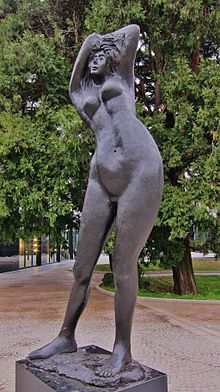 In 1996, he donated 356 works, created since 1927, to the city of Lugano : this gave birth to the Aligi Sassu and Helenita Olivares Foundation , which has since held thematic exhibitions of his works. On June 25, 1999, the Aligi Sassu and Helenita Olivares Foundation was founded in Mallorca by will of the Sassu couple. On March 31, 2000, the non-profit cultural association Amici dell'Arte di Aligi Sassu was established in Besana in Brianza. He died in Pollença on July 17 of the same year, at the age of 88, his birthday .

Sculpture by Aligi Sassu, Legnano
.jpg)
Martyrs of Piazzale Loreto
.JPG)
The Nuredduna sculpture from 1995
Shipping and returns
Shipping and returns
The transaction takes place with maximum security for both the seller and the buyer. We take care of the conformity (provenance, authenticity, state of conservation) of the work and handle the shipping.
Returns are possible no later than 14 days after receiving the order.